Sauces, Seasoning and Stocks
How to Make Vegetable Stock
Make a light, balanced stock from onion, carrot, celery and herbs, then strain, portion and cool it with care.
In this guide
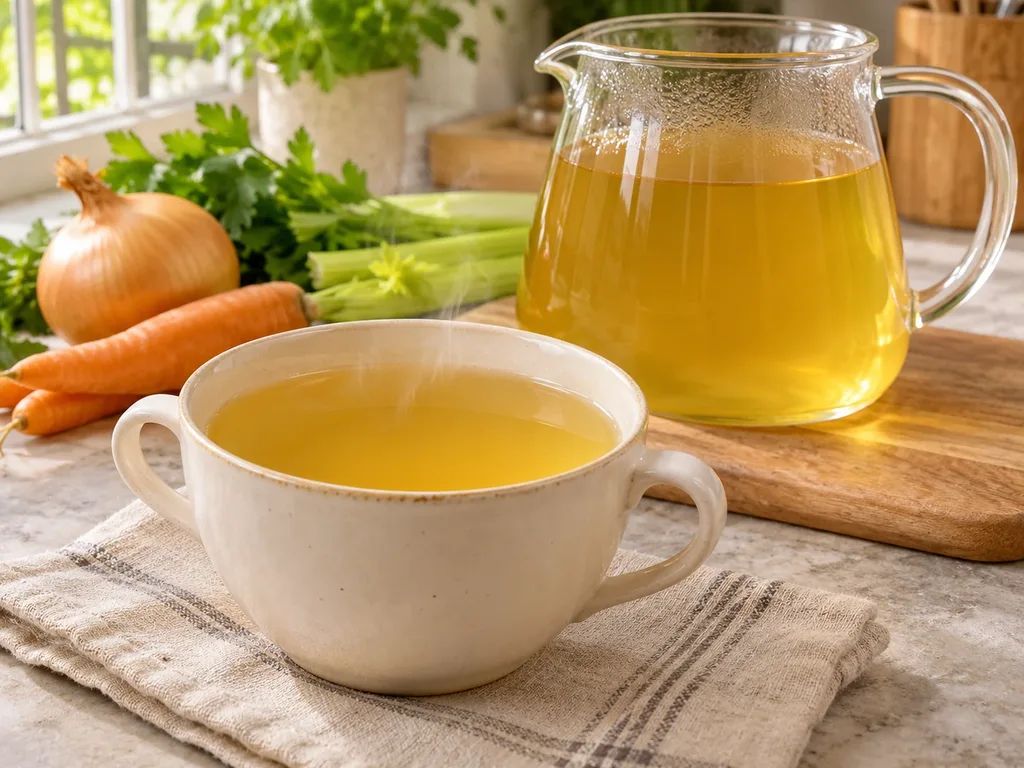
Vegetable stock gives soups, grains and sauces a quiet foundation. The most useful version is clean-tasting and lightly seasoned, with enough character to support the next dish without taking it over. A few sound vegetables and a controlled simmer are more helpful than a pot filled with every trimming in the kitchen.
What you will learn
- Choose vegetables that produce a balanced stock.
- Control extraction with a gentle simmer and timely tasting.
- Strain, portion and cool stock promptly for later meals.
Equipment to have ready
- A saucepan holding at least 3 litres
- Stable board and chef’s knife
- Kitchen scales and measuring jug
- Wooden spoon and ladle
- Fine sieve
- A second saucepan or large heatproof bowl
- Shallow food-storage containers
- Ice and a larger basin, optional for a cooling bath
Ingredients for the practice
- 250 g onions, about 2 small, peeled
- 150 g carrots, about 2 medium, scrubbed
- 120 g celery, about 2–3 stalks, washed
- 1.5 litres cold water
- 4–5 parsley stalks, washed
- 1 bay leaf, optional
- 6 whole black peppercorns, optional
- No added salt for this starter batch
1. Decide how the stock will be used
This batch starts with 1.5 litres of water and usually yields approximately 1–1.2 litres after simmering and straining. The actual yield depends on the pan, lid position and heat. Allow around 15 minutes for preparation and 40–50 minutes for simmering, plus time to strain and portion. Do not plan to leave it unattended for hours.
Keeping the stock unsalted makes it flexible. A soup can be seasoned at the table, while a sauce may reduce the stock further and concentrate any salt already present. If the next dish needs 1 litre precisely, measure after straining. A little extra water can bring it back to the required volume; taste it again before using.
2. Choose sound vegetables and useful trimmings
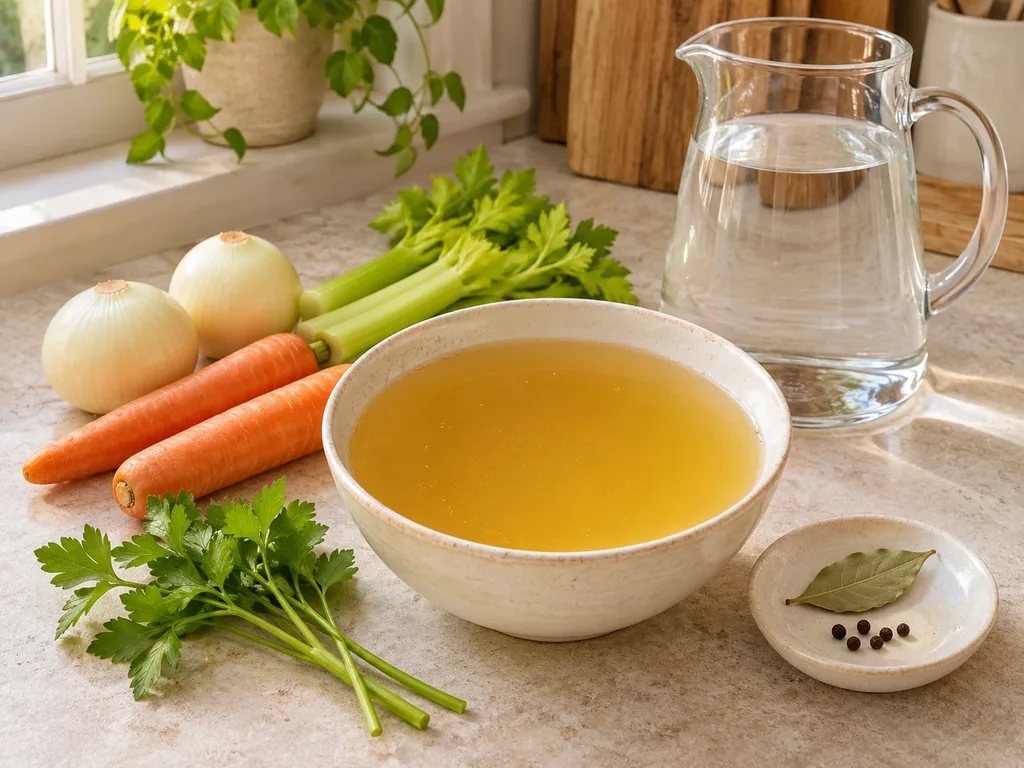
Start with fresh, sound onion, carrot and celery. Trim away damaged sections and discard anything mouldy or spoiled. Stock is a way to use edible trimmings, not a way to make unsafe food usable. Wash gritty celery joints and parsley stems carefully. Peel the onions for a pale, predictable result.
Clean leek greens, mushroom stems or a few additional herb stalks can suit later batches, but add one change at a time. Large amounts of cabbage, broccoli or cauliflower produce a stronger flavour that may not suit a delicate sauce. Beetroot changes the colour; too much carrot makes the stock sweeter. Collect suitable trimmings in the refrigerator for prompt use, or freeze them in a labelled container.
3. Cut into manageable, fairly even pieces
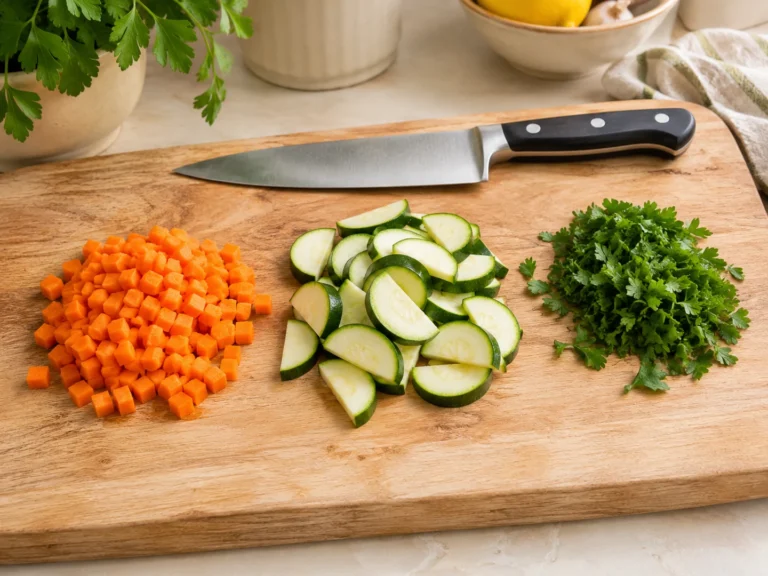
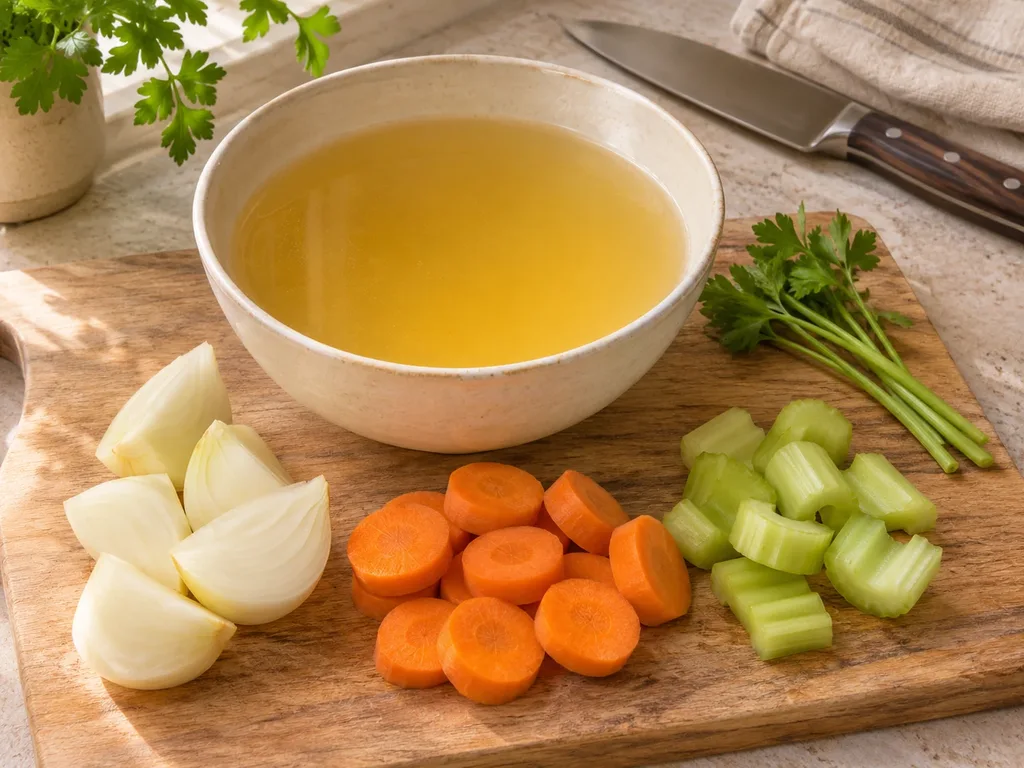
Cut the onions into wedges or chunks about 2–3 cm across. Slice the carrots and celery into pieces around 1–2 cm thick. These cuts are much rougher than those for a finished soup because the vegetables will be strained out. You still want similar sizes so they soften at a reasonably consistent pace.
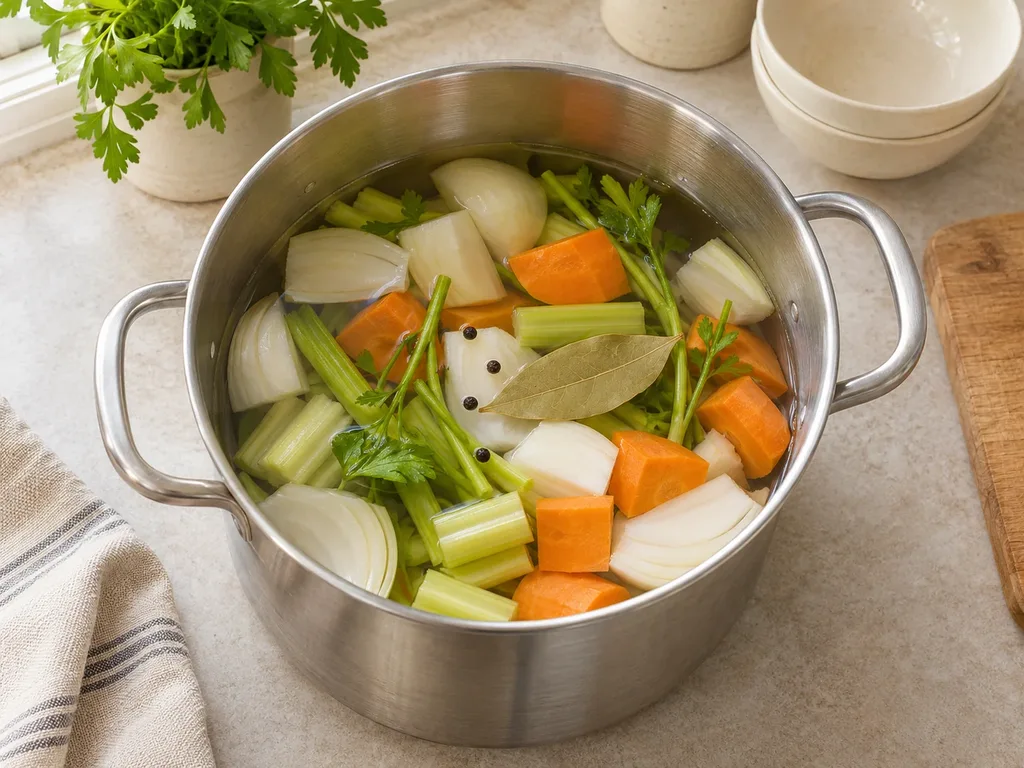
Put the vegetables, parsley, bay leaf and peppercorns into the saucepan. Pour over the measured cold water. It should surround the ingredients comfortably; if the pot is so wide that much of the vegetable is exposed, choose a narrower one rather than adding litres of unmeasured water. Leave plenty of headroom for safe handling.
4. Bring to a gentle simmer
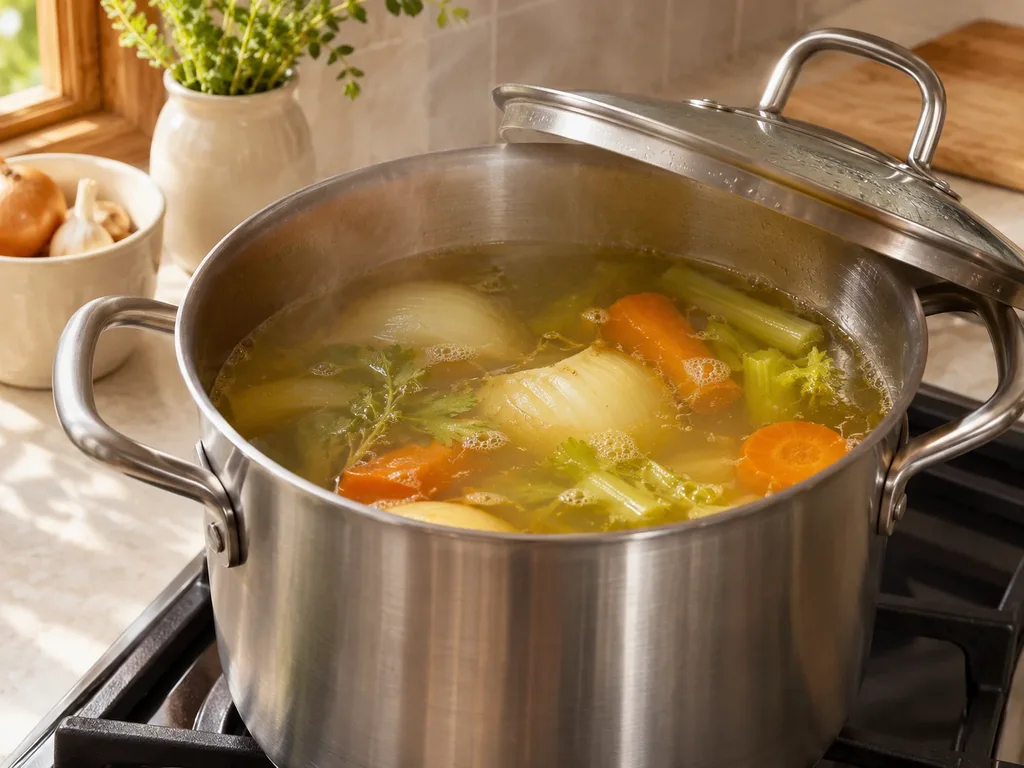
Set the pan over medium heat and bring it toward a simmer. When small bubbles begin to rise and the surface moves gently, reduce the heat. Leave the lid slightly ajar to limit evaporation while allowing you to watch the liquid. Aim for occasional small bubbles, not vigorous rolling movement.
Start a 40-minute timer at this stage. Stir once to settle the vegetables, then let the pot cook quietly. A hard boil drives off water quickly, throws vegetable fragments around and makes the stock harder to control. If the liquid drops rapidly, reduce the heat and partly cover more of the pot. Keep the handle safely out of the walkway.
5. Taste before extending the cooking
At about 35–40 minutes, ladle a little liquid into a small dish and let it cool enough to taste safely. It should smell gently savoury, with sweetness from the carrots and onion and a mild celery note. The vegetables will look softened and less vivid than they did at the start. Taste again around 45–50 minutes if the flavour is still too faint.
Longer is not automatically better. This is a vegetable infusion, not a long-cooked bone stock. If it tastes balanced, stop. If it is weak because the pan contained too much water, strain first and reduce the liquid gently afterward. If a vegetable is dominating, do not keep cooking in the hope that every flavour will eventually balance itself.
6. Strain without forcing the vegetables
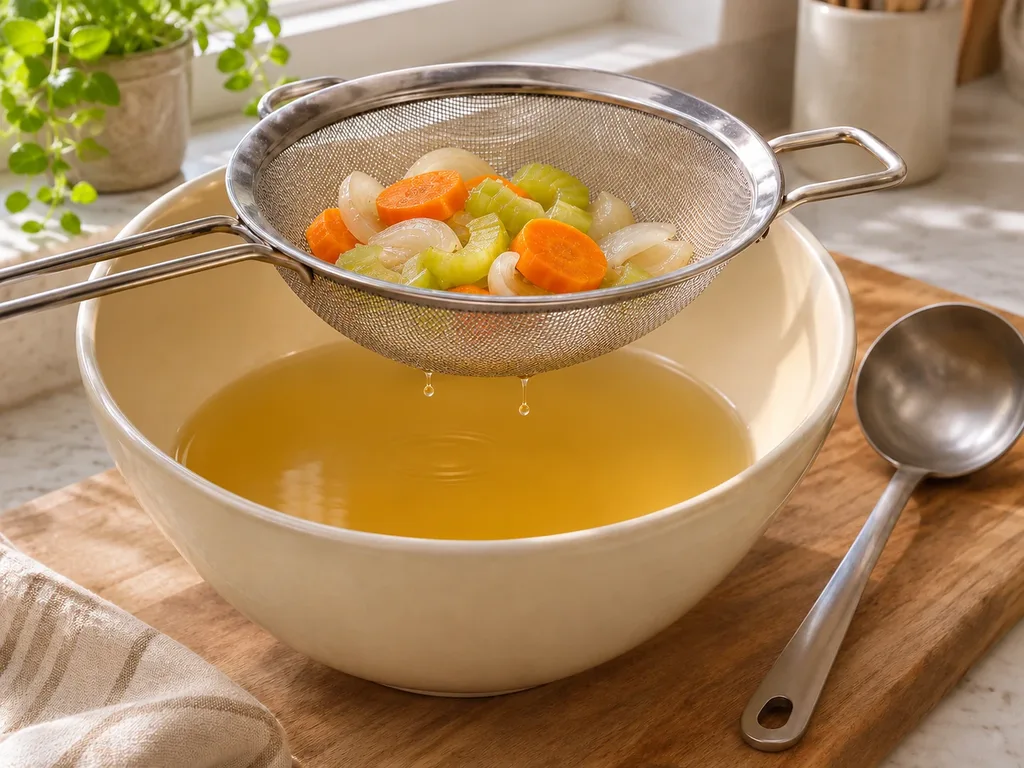
Set the fine sieve securely over a clean heatproof bowl or second saucepan. Turn off the heat. Use a ladle to transfer most of the liquid first, especially if the full pot would be awkward to lift. Keep your face and hands clear of steam. When safe, pour the remainder slowly while keeping control of the pan.
Let the vegetables drain naturally for a few minutes. Do not mash them hard through the sieve if you want a relatively clear stock: that pushes fine particles into the liquid. A little haze is normal and does not prevent the stock being useful. Avoid straining through an unstable stack of bowls or holding a hot sieve in one hand while pouring with the other.
7. Measure and portion for real meals
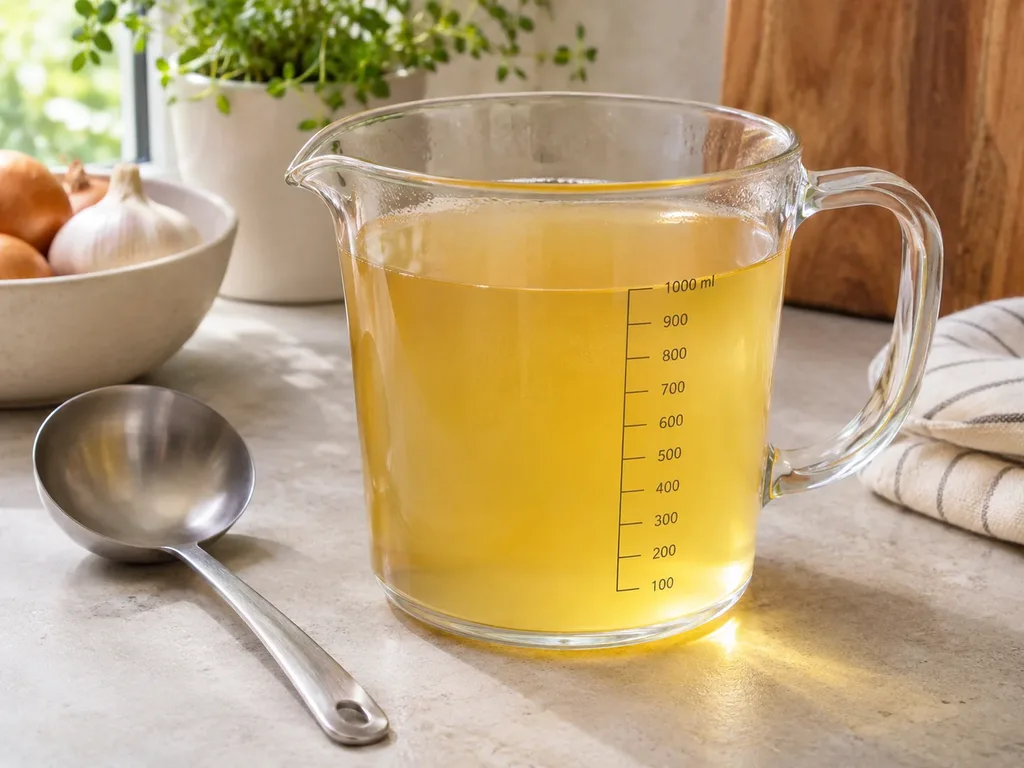
Measure the strained stock in a heatproof jug, working in batches if necessary. Note the yield and the vegetables used so you can repeat a result you like. Taste without trying to make it as strongly seasoned as a finished soup. A light stock that lets the next ingredients shine is doing its job.
Use it straight away while hot, or divide into practical amounts: 250 ml portions for sauces, 500 ml for a small soup, or smaller frozen portions for loosening a pan. Choose clean containers suited to refrigeration or freezing. Leave expansion space when freezing and keep the portion volume with the date on the label.
8. Cool promptly and store carefully
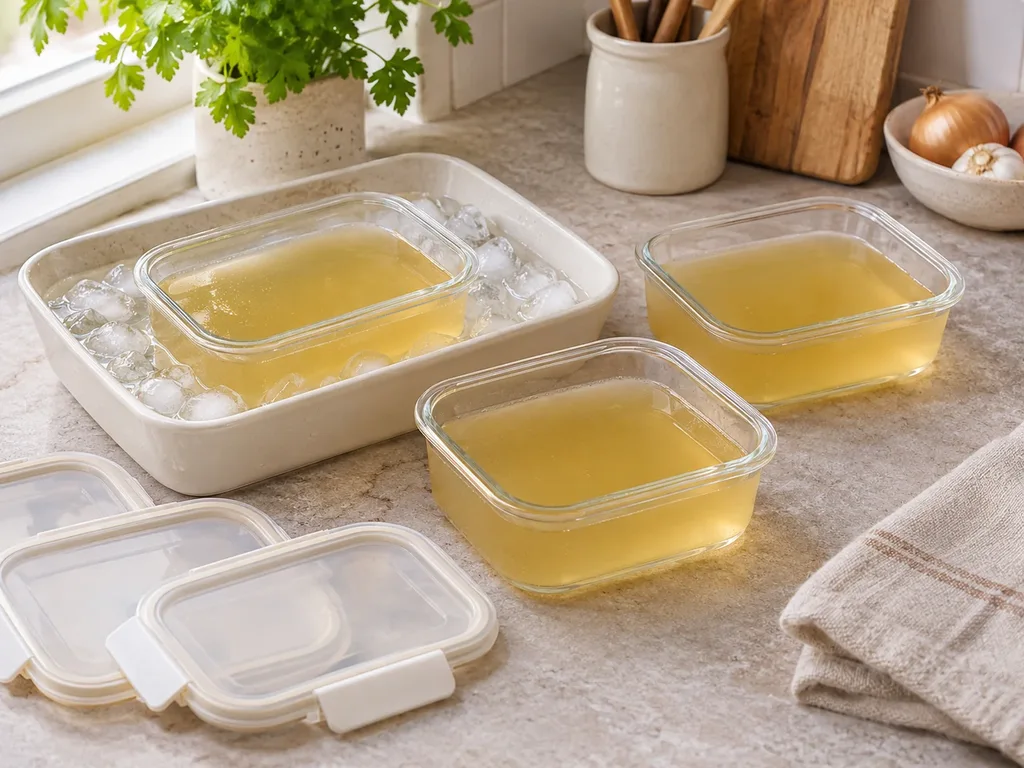
For later use, divide the stock into shallow containers and refrigerate promptly. Small portions may go into the refrigerator while still warm. Alternatively, place the containers in an ice-water bath and stir the stock occasionally with a clean spoon to speed cooling. Do not leave the full saucepan on the stove until bedtime or overnight.
Refrigerate within two hours, or one hour when the surroundings are above 32°C (90°F), at 4°C (40°F) or below. For this lesson, use refrigerated stock within three days; freeze it if you need longer. Thaw frozen stock in the refrigerator, or heat directly from frozen in a saucepan when the container permits easy removal. Reheat to at least 74°C (165°F) before serving; bringing a liquid stock to a rolling boil is a clear practical endpoint.
When it does not go to plan
The stock is weak. Strain and reduce gently, tasting as the volume falls. Next time measure the water and use a suitably sized pot.
The stock is bitter or overpowering. Check the vegetable mix and cooking time. Large quantities of strong greens, onion skins or long extraction can dominate; do not add sugar to conceal a poor base.
The stock is cloudy. Use a quieter simmer and avoid pressing the vegetables. Cloudiness affects appearance more than usefulness in an opaque soup.
Put it into practice
Make one unsalted batch using only the listed vegetables. Reserve a spoonful of the unseasoned stock, then season a second spoonful lightly to learn how salt changes the flavour. Record the strained volume and use the batch in one soup or rice dish.