Rice, Pasta, Grains and Beans
How to Cook Rice
Cook a small batch of white basmati with measured water, gentle heat and a short rest, then handle any leftovers promptly.
In this guide
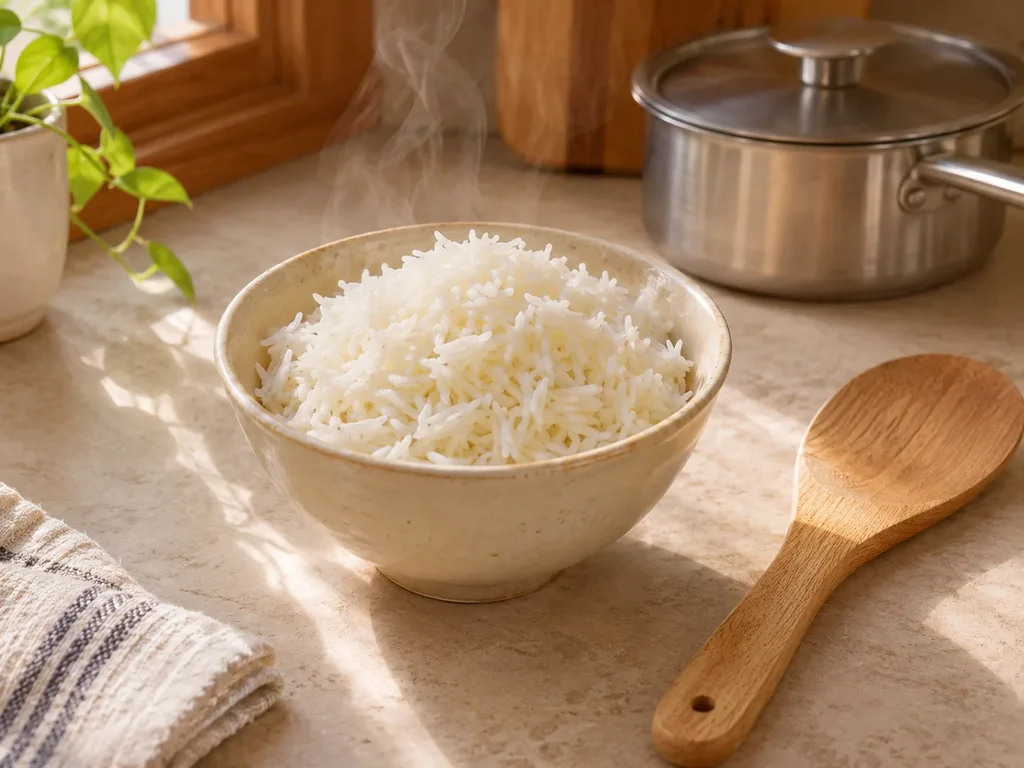
Rice becomes more predictable when you know the grain, measure accurately and leave the covered pan to do its work. This lesson uses a small white-basmati batch to explain the absorption method. Once you understand the sequence, you can follow the directions for a different rice without assuming every grain needs the same water or cooking time.
What you will learn
- Match the water and timing to the specific rice.
- Control the simmer and rest before fluffing.
- Cool, store and reheat rice using a clear safety routine.
Equipment to have ready
- Kitchen scales
- Measuring jug
- Fine sieve
- A small heavy-based saucepan with a well-fitting lid
- Fork or rice paddle
- Timer
- Shallow containers if keeping leftovers
Ingredients for the practice
- 120 g white basmati rice; the reference quantities here follow Tilda Pure Basmati’s covered-pan method
- 240 ml water for that reference product; use your own packet’s quantity if different
- A small pinch of salt, optional
1. Identify the rice and the intended result
Read the name and cooking directions on the packet. White basmati, jasmine, brown rice, short-grain rice and parboiled rice behave differently. The dry weight alone does not tell you how much water to add. A pan method and a rice-cooker method can also require different measurements because their evaporation and controls differ.
Here the aim is a small side dish with separate basmati grains. For a concrete starting point, Tilda’s covered-pan directions use 120 g of its Pure Basmati with 240 ml water and a 10–12 minute low-heat cooking stage. Use that product for the exercise, or follow the quantities on your own rice. Keep the packet so your next batch can be compared accurately.
2. Measure before rinsing
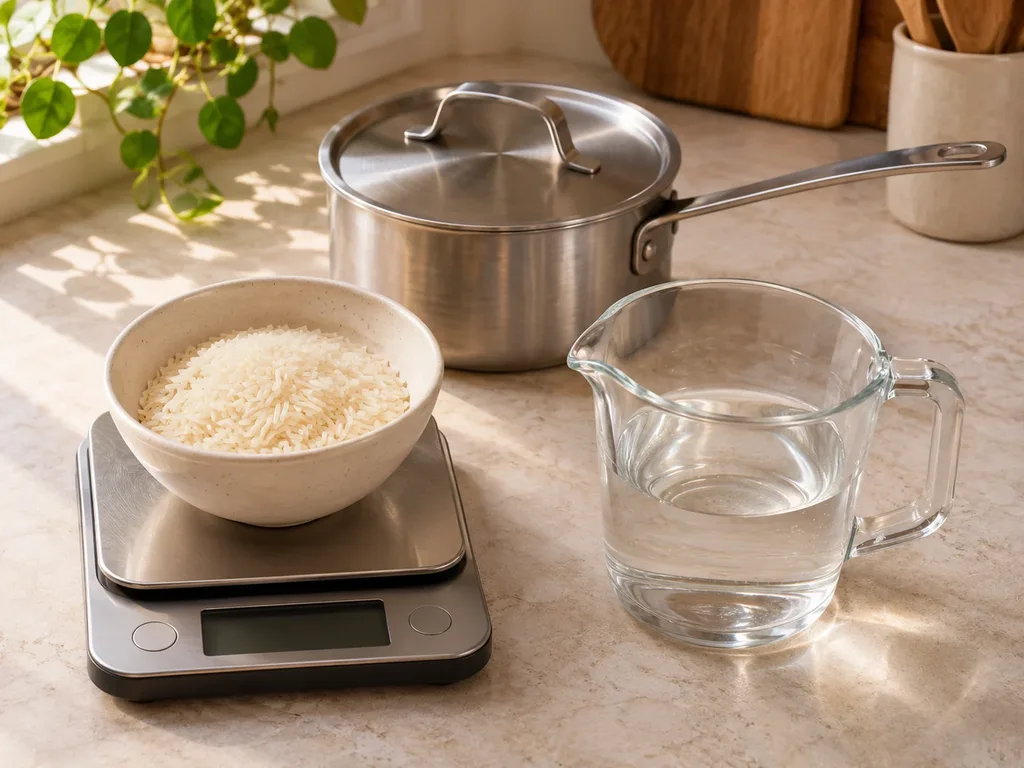
Weigh the dry rice into a bowl. Measure the cooking water separately in a jug on a level surface, reading the marking at eye height. Avoid measuring the rice in one casual mug and the water in a different one. Record the weight and water amount if you are learning how your particular pan behaves.
A small batch is useful for practice, but the saucepan still matters. A very wide pan can lose water faster than a narrow one, while a poorly fitting lid lets steam escape. Choose a pan that holds the rice and water comfortably with room above them. Scaling up later may require a larger pan and a fresh check of the cooking method.
3. Rinse and drain when the method calls for it
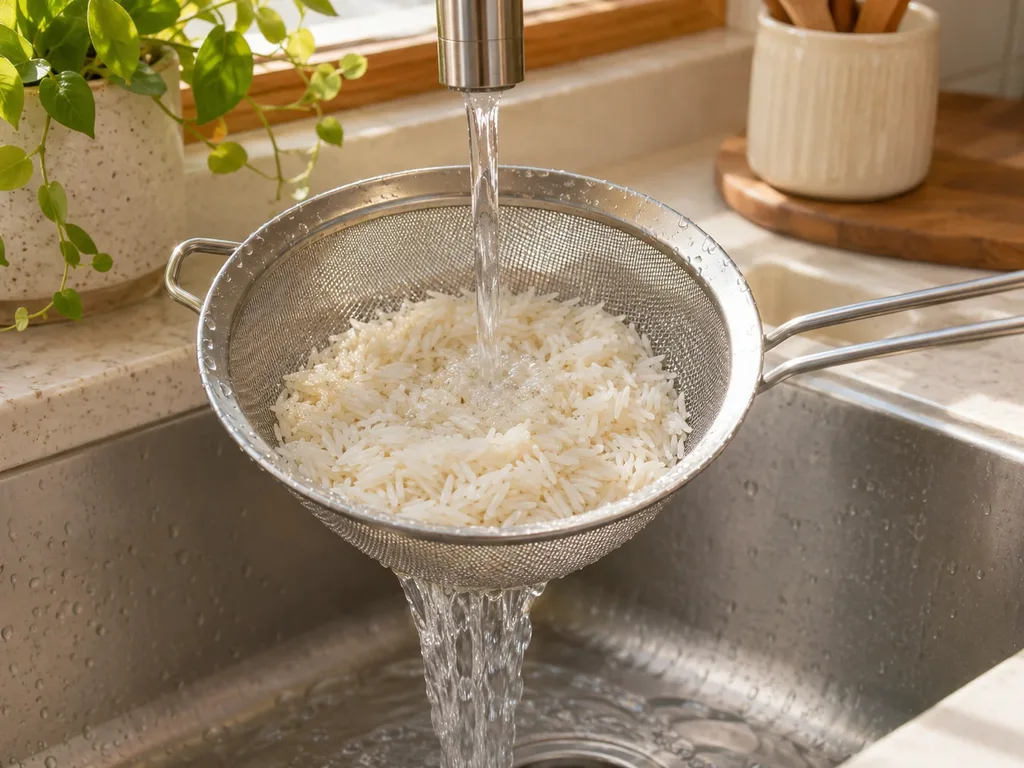
Put the basmati in a fine sieve and rinse under cold running water, moving the grains gently with clean fingers or a spoon. Alternatively, rinse in a bowl with several changes of water. Drain thoroughly before adding the measured cooking water. The aim is to remove loose surface starch without breaking the grains.
Do not add an unplanned soak to this practice batch. Soaking changes how much water the grain has already absorbed and can change its cooking time. For another product, follow the packet if it says not to rinse or specifies a soak. Rice for risotto or pudding has a different texture goal from this plain side dish.
4. Combine and bring to a controlled simmer
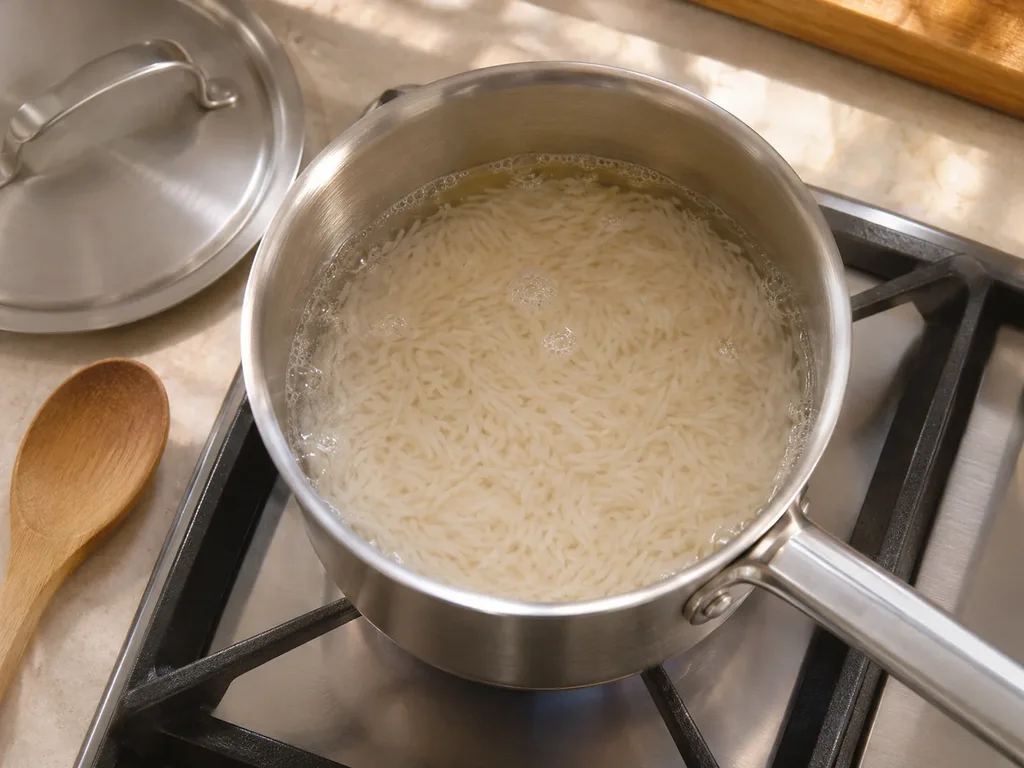
Add the drained rice and measured water to the saucepan with a small pinch of salt if wanted. Stir once to distribute the grains. Bring the water to a simmer over medium heat, then cover and reduce the heat to low. Start the cooking timer once the covered pan is simmering gently.
You want enough heat to maintain steady cooking without forcing steam out around the lid. Strong rattling, vigorous bubbling or a plume of escaping steam suggests the heat is too high. If your hob stays very hot after turning down, move the saucepan carefully to a smaller or cooler burner that can maintain the gentle setting.
5. Let the covered pan cook
For the reference basmati method, cook over low heat for 10–12 minutes. Avoid repeatedly lifting the lid or stirring: the trapped steam is part of the method, and vigorous stirring can damage the softening grains. Use the time to prepare something that does not distract you from the hob for long.
At the first checking point, lift the lid briefly and inspect. There should be little free water remaining, and the grains should have lengthened. Taste a few grains after cooling them on a spoon. The final rest will help moisture settle, but rice that is distinctly hard needs a small correction rather than simply being declared finished.
6. Rest before fluffing
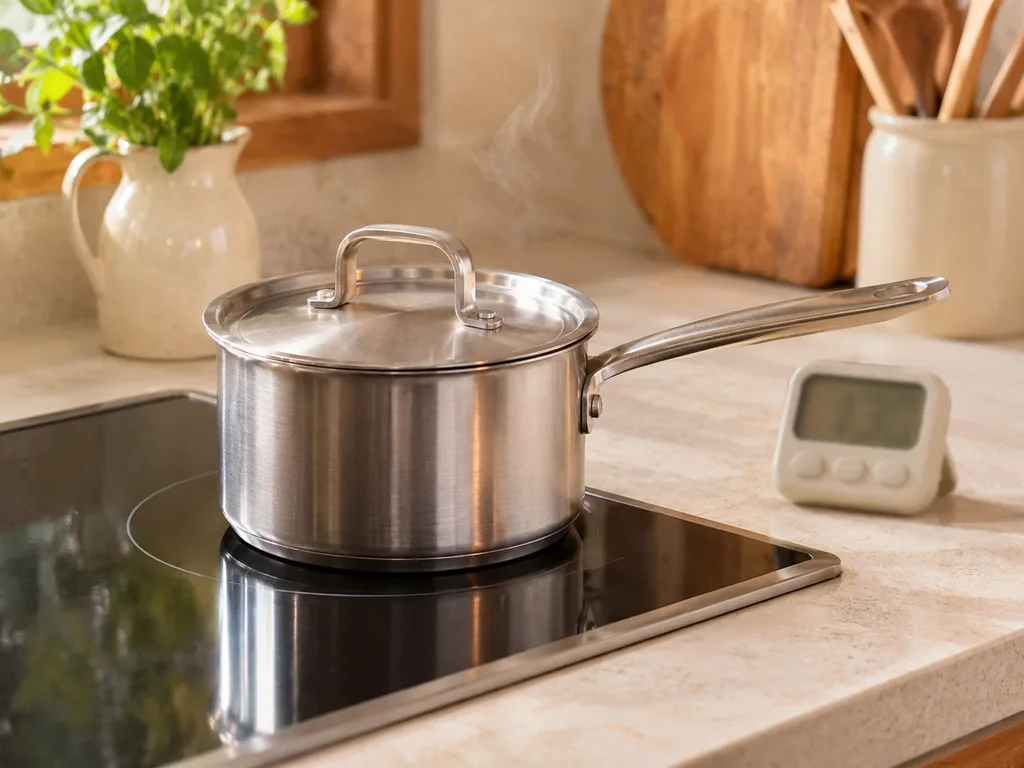
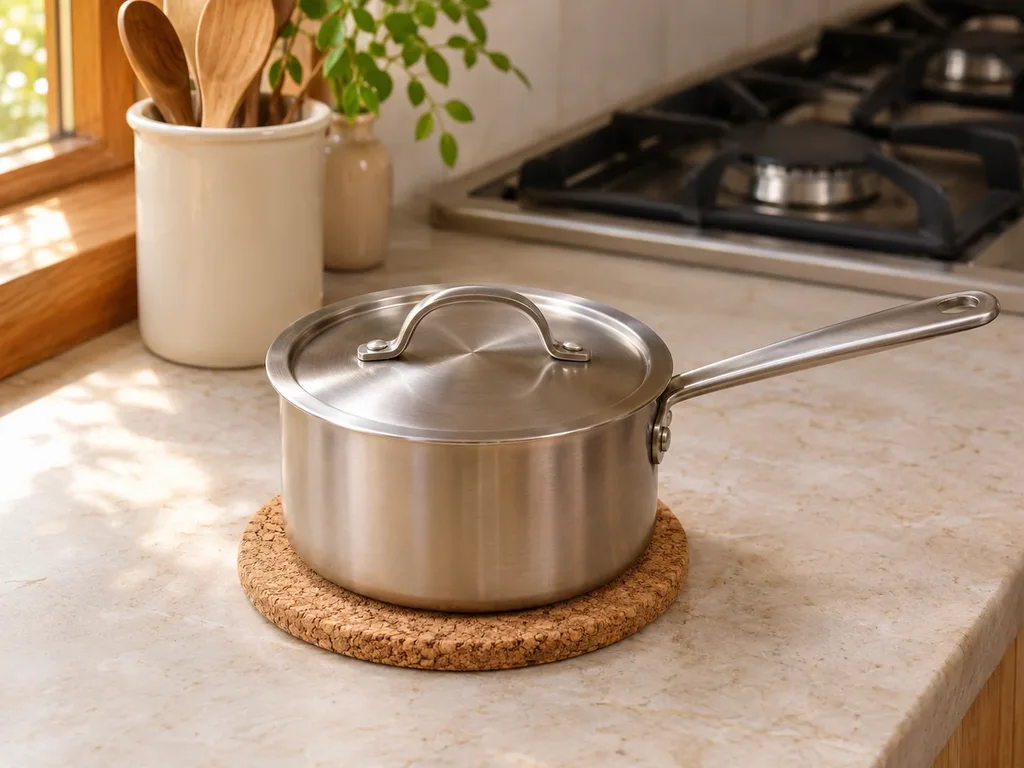
Turn off the heat and move the pan away from a burner that remains hot. Keep it covered for at least the three minutes specified by the reference method; a brief rest gives the rice time to settle before serving. Place the hot pan on a heatproof surface. Do not wrap it in a cloth near a live flame.
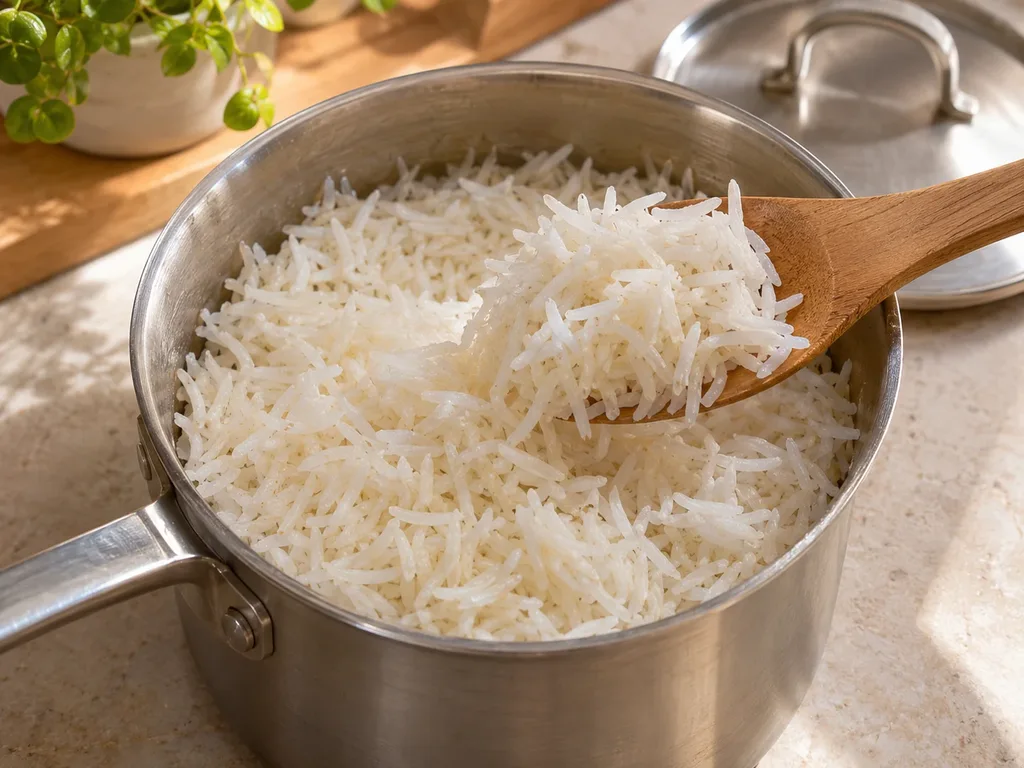
Lift the lid away from your face and use a fork or rice paddle to lift and separate the grains gently. Work from the edge toward the centre rather than stirring in tight circles. The rice should feel tender, with grains that hold their shape. Serve promptly while hot, and make a note of the actual cooking time if you want to repeat the result.
7. Make small, measured texture corrections
If the pan is dry but the rice is still too firm, sprinkle over about a tablespoon of boiling water, cover and return to very low heat for a few minutes before resting again. Add small amounts so you do not turn a dry batch into a wet one. If the rice is cooked but slightly damp, a brief uncovered rest off the heat may let extra steam escape.
If there is a substantial pool of water, check the original measurements and packet method. Drain carefully if needed, then let the rice rest; the result may be softer than intended. If the base has scorched, transfer the unburnt upper rice gently to a clean bowl without scraping the burnt layer into it. Adjust the heat and pan choice next time.
8. Cool and store rice promptly
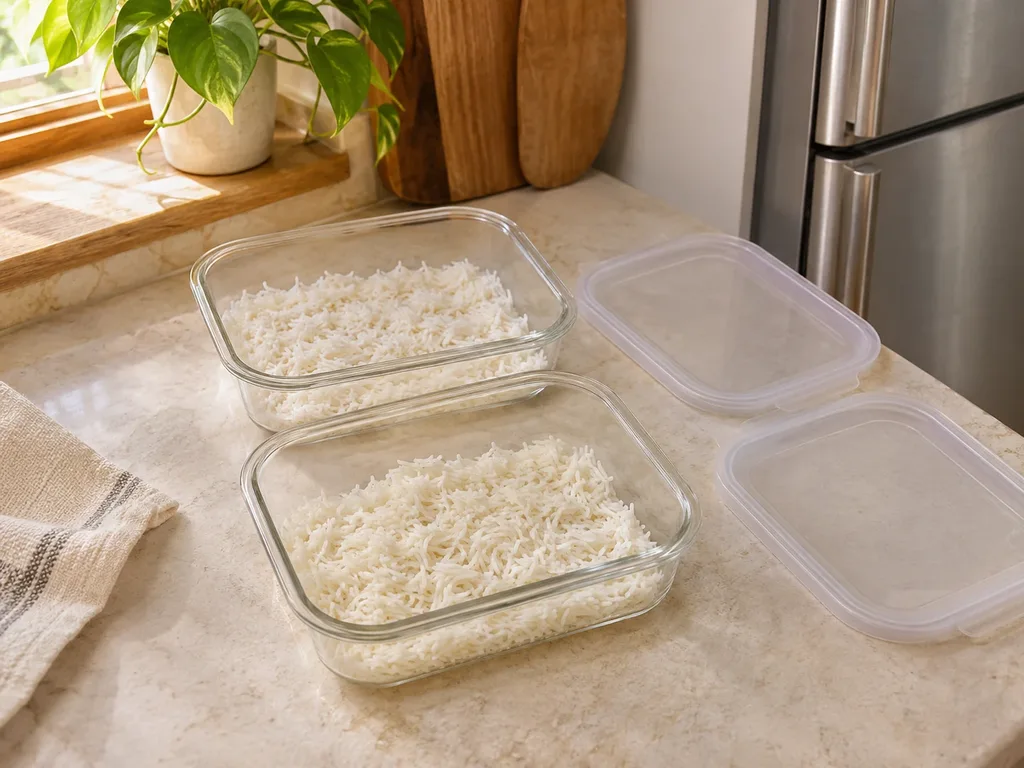
Use the Food Standards Agency’s rice guidance for leftovers: divide into small shallow portions and cool quickly, ideally within one hour. Do not leave rice cooling in a warm saucepan or switched-off cooker. Refrigerate at 4°C (40°F) or below and eat within 24 hours, or freeze portions as soon as they have cooled, ideally within one hour of cooking, for longer keeping.
For frozen portions, defrost in the refrigerator, then reheat and eat immediately. Reheat only once, until steaming hot throughout; 74°C (165°F) is the general U.S. leftover endpoint. Add a little water if needed and stir during microwave reheating to avoid cold patches, using a suitable vented cover. Rice can contain spores that survive cooking, and poor storage can allow harmful growth or toxins. Reheating does not rescue rice left out too long.
When it does not go to plan
The base scorches while the top stays firm. Lower the heat, check the lid fit and use a heavier pan. Do not stir the burnt base into the rest.
The rice is gummy. Check rinsing, excess water and stirring. Follow the exact rice’s method and fluff gently after resting.
A different rice fails with the same ratio. Return to that product’s instructions. Variety, processing, soaking and equipment change its needs.
Put it into practice
Cook the small reference batch and note the rice name, dry weight, water quantity, pan diameter, heat setting and actual time. Repeat with the same setup once before changing the quantity or trying a different grain.